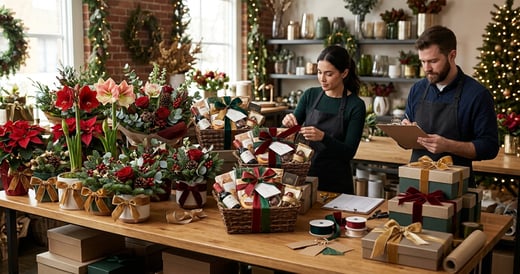
Your display window is working when you are not. It faces the street or the shopping center corridor twenty-four hours a day, seven days a week, and every person who passes it is a potential customer receiving a first impression of your shop. It is the cover to your book. The question is whether that impression is doing your business any good.
Think of your window display as you would a Hollywood blockbuster. It needs entertainment, drama, and panache. Your flowers are the stars of the show. The display is the production. And like any good production, it requires creative planning, the right props, and a clear story to tell.
Start With a Script
Before you move a single item, decide what you are trying to communicate. A display without a central idea is just an arrangement of products. A display with a clear concept gives customers a feeling, a mood, or an aspiration that they associate with your shop.
Approach each window display the way you approach a floral design on a grand scale. Write down the concept first. Is this an autumn harvest scene? A Victorian holiday vignette? A minimalist spotlight on a single show-stopping design? A dramatic monochromatic statement in a single color?
Once the concept is clear, create a checklist of materials, props, and flowers needed. Schedule uninterrupted time to dress the window. A rushed display always looks rushed.
Design Concepts That Stop Traffic
The most effective window displays share one quality: they communicate their story at a glance. A customer walking past at a normal pace has less than three seconds to register your window before they have moved on. Here are concepts that work:
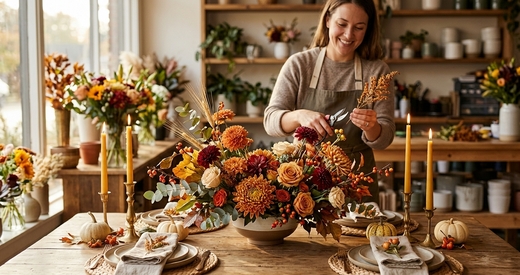
A theme-based display uses color, style, or emotion to unify everything in the window. Feature rich autumn tones using containers, linens, and flowers in gold, rust, and burgundy. Or highlight a style -- Victorian, with nosegays, lace, and pearl details. Or create a feeling of nostalgia with antiques, sepia tones, and simple classic designs.
An art-inspired display pairs a framed print or poster with arrangements that echo its colors and style. A Van Gogh sunflower poster accompanied by a spectacular sunflower arrangement -- with every sunflower-themed item in your shop positioned nearby -- is immediately memorable and creates an obvious connection that customers appreciate.
A scene display suspends an activity in time and draws customers into a story. A garden setting interrupted mid-task, with a tipped-over clay pot and tools lying nearby, makes customers imagine the person who was just there. A Christmas vignette with dolls or plush animals arranged around a decorated tree creates warmth and nostalgia.
A minimalist display uses restraint to create impact. Three brightly lit vases, each holding a single dramatic flower, can stop traffic as effectively as a complex arrangement. The absence of clutter makes each element feel significant and instantly grabs the eye.
Props, Lighting, and Special Effects
Props should enhance the featured product, add structure, or create a specific effect. Most of what you need is already in your shop. Plant stands covered in fabric become elegant pedestals. Flower buckets of varying heights create layered displays. Fabric in various textures and solids -- sourced from discount tables at craft stores -- can be used repeatedly across many different seasonal themes.
Lighting is the single most powerful tool in window display. The difference between a shop window that glows invitingly at dusk and one that looks dark and uninviting can be the difference between a customer who walks in and one who keeps walking. Use colored bulbs for seasonal effect. String or rope lights to accent an area. Try lighting a display from below, like footlights, for a dramatic result.
Movement catches the eye more reliably than any other design element. Sheer fabric billowing from a fan set on low, suspended paper butterflies or flowers that turn gently in a light breeze, or a simple animated figure -- any of these give the window a quality of life that static displays cannot match. Make sure to view your window from the distance your customer would (drive-by, or across the street) and walk by.
Keep It Coordinated
A window display earns its maximum return when it is connected to everything else happening in the shop. When a display is important enough to build, it is important enough to promote. Send an email to your customers highlighting the featured merchandise. Use in-shop signs that direct customers from the window feature deeper into the store. Surround the displayed merchandise with complementary items that create a reason for multiple purchases.
Change your window displays every month or more. It is a perfect way to announce holidays and special occasions. A sign having some simple copy or title can be helpful in communicating your message. Brief your team every time you install a new display. They should know what you are featuring, what the promotion attached to it is, and how much you expect it to move. If a display is not performing within a week, revamp it with your team's input. A window display that does not sell is not decoration -- it is a missed opportunity. Restructure it until it works.
A window display attracts customers who are already outside your shop. Make sure online customers can find you too. Check your local Google ranking with our free florist rank scanner.