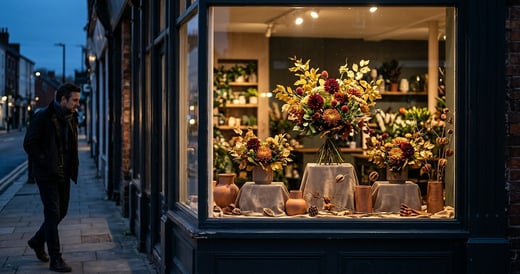
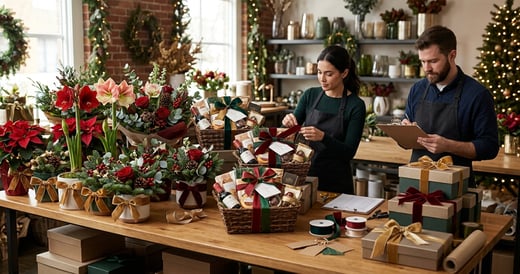
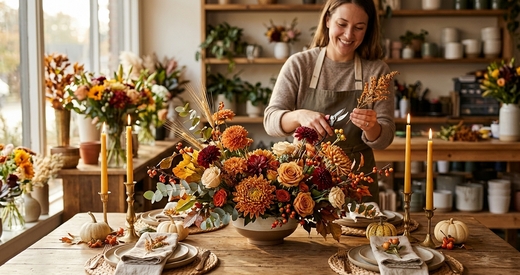
It might only be June, but if you want a stronger fall and winter, your planning needs to start right now. Most customers begin looking for holiday merchandise and decorating ideas in September - which means the florists who win the holiday season are the ones who are ready before their customers even start looking. Your store should be set for fall and Halloween by Labor Day. Christmas decor in-store by the end of October (if not earlier).
Here's a strategy I've recommended to florists for years that consistently outperforms the traditional single-event open house: instead of one big night, plan a series of small themed events stretched across six to eight weeks.
Why a Series Beats One Big Event
The traditional holiday open house has a lot going for it. But it has one significant limitation: it's one night. If your best customer is traveling that weekend, you miss them. If the weather is bad, turnout suffers. All your eggs are in one basket.
A series of smaller events changes that equation completely. Here's what you gain:
- A longer selling season. Instead of one sales spike, you create a steady drumbeat of traffic from October through December.
- More customer reach. Different events attract different customers. Not everyone can come to every event, but everyone can come to at least one.
- Urgency at every step. Each week's special has a limited time window, which motivates customers to act rather than wait.
- A destination, not a stop. When customers know something new is happening every week, your shop becomes the place they want to visit regularly throughout the season.
- Real merchandise data. You'll quickly learn which themes draw traffic and which products move - invaluable information for buying next year.
A 10 to 15 percent increase in holiday sales over the prior year is a realistic result when this is executed well. For most flower shops, that's a meaningful number.
Building Your Theme Calendar
The heart of this strategy is choosing six to eight themes that showcase your fall and winter merchandise in ways that feel fresh and distinct each week. Start by looking through the merchandise you have in stock, on order or that's already arrived, and let the product inspire the themes.
A few that work reliably well:
Autumn themes - "Awesome Autumn" (rich fall colors in fresh and permanent arrangements), "Harvest Home" (baskets, gourds, warm textures), "Moonlight and Magic" (deep burgundy, plum, and bronze for a sophisticated Halloween twist).
Holiday themes - "A Country Christmas" (patchwork, mason jars, wildflowers, cornucopias), "Victorian Village" (elegant, layered, candlelit), "Sugar & Spice" (warm and cozy, great for gift items and food pairings), and Home for the Holidays (traditional, nostalgic items and hues).
Gender-specific events - "Girls' Night Out" held on a Thursday evening in late October gives your most loyal female customers early access to new holiday merchandise. Extended hours mean working women can attend after their day ends. "Men's Morning" on a Saturday after Thanksgiving helps your male customers shop confidently - organize a simple gift guide by recipient type and price point, and you remove the anxiety of holiday shopping entirely.
The key principle for all themes: choose images and associations that create an immediate, clear picture in your customer's mind. "A Country Christmas" works because everyone knows exactly what that looks like. Vague themes don't generate the same excitement or the same foot traffic.
Making It Work in Practice
Plan your calendar first. Map each theme to a specific week from October through mid-December. Print a simple calendar to distribute to customers and post on your website. When customers can see the full lineup, they'll plan around it - and come back multiple times.
Highlight one theme per week. You don't need to redecorate the entire shop every seven days. Keep all the seasonal merchandise visible, but spotlight one theme's vignette with a weekly special. That week's featured items get prominent placement, signage, and a promotion tied to them. A quick shop tour reel is a valuable effort for social media posts announcing each week.
Take it outside the shop if needed. If your location doesn't naturally draw walk-in traffic, take your themes to where the people are. Volunteer to decorate a hospital lobby, a house on a local home tour, or a booth at a civic event. Every time someone sees your arrangements in a compelling setting, they're being introduced to your shop.
Start promoting in August. Customers begin mentally preparing for fall earlier than most florists expect. An email or social post in late August teasing your upcoming event series plants the seed before your competitors have even started thinking about it.
Keep the Momentum Going
The same logic that makes a fall series work applies to spring. Once you've built the habit - for your team and your customers - of regular themed events, you can extend it through Valentine's Day, Easter, Administrative Professionals' Week, and Mother's Day. The calendar never runs out of opportunities. It's just a matter of planning ahead. Looking for more ways to get ahead during summer? Tackle this quick checklist.
Start now. Pull your fall merchandise orders, block out the weeks, and pick your themes. The shops that start planning in June are the ones whose December sales look the way they want them to.
Want to make sure new customers can find your shop when they're searching for florists this holiday season? Check how you rank in local search with our free florist rank scanner.
.png?width=89&height=50&name=Blog%20Design%20(1).png)