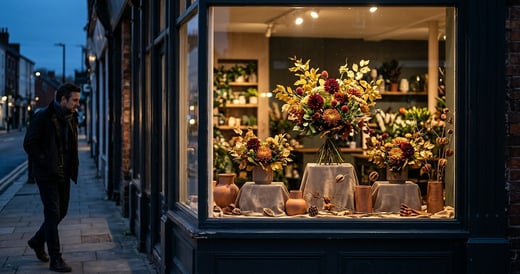
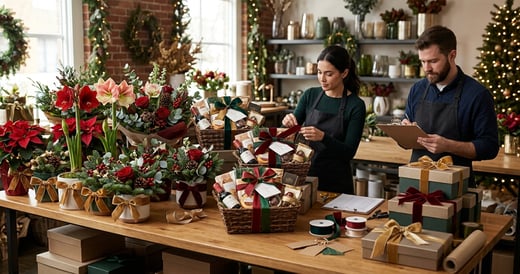
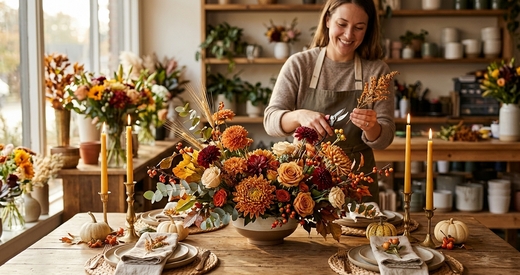
There is an important difference between a display and a vignette, and it is worth understanding the difference because one sells products and the other sells a dream - and the dream is almost always worth more.
A display says to customers: "Here is a collection of our products.”It is informative and useful. A vignette says something entirely different: "Here is how your life could feel." It shows customers not what you sell, but what they could have - a corner of their home that looks and feels a certain way, a table set for an autumn dinner, a bedside arrangement that tells a quiet story.
That difference in what a vignette communicates is what makes it one of the most powerful selling tools available to a retail florist.
What Makes a Vignette Work
A vignette is a small scene. It is a collection of different items that belong together because of their use, their theme, their color palette, or the feeling they create together. It tells a story. Unlike a product display, it does not try to show everything. It shows a curated collection that is just enough to spark the customer's imagination and start them thinking: "I want that in my home."
Effective vignettes rely on restraint. The instinct to show as much merchandise as possible in one place is understandable - more products visible means more chances for a sale, right? In practice, the opposite is true. A vignette that is visually crowded loses its focus and its story. The customer cannot see what you are trying to tell them.
Resist the urge to fill every inch. A simple table with a stack of books, a small lamp, a pewter candle holder, and a silver tin filled with fresh violets and ivy tells a more compelling story than a table overloaded with every product you want to move. The vignette has done its job when it makes the customer want to recreate that feeling in their own home.
Building a Vignette That Sells
Start with a storyboard. Before you place a single product, write down the feeling or scene you are trying to create. Is it an autumn harvest table? A cozy reading corner? A holiday mantel? The story you are telling shapes every decision that follows. Keep the story focused and simple.
From there, build your vignette around three price tiers. Your largest, highest-priced item should be the anchor - usually a significant floral arrangement, an oversized vessel, or a premium decorative item. This key item attracts customers to the display from across the shop, even if it is beyond most budgets. It starts the dream.
Your medium-priced items complement the anchor and draw customers closer. Your lower-priced items - a small hand-painted vase, a set of coordinating candles, a simple seasonal accent - provides every customer a way to take a part of the dream home today even if they cannot afford the anchor item. Every vignette should have something for every budget.
Every vignette in your shop should incorporate flowers or plants. Fresh blooms or permanent botanicals should always be present, whether as the anchor or as the detail that brings the scene to life. This is the one category your competitors at the big box stores and home decor chains cannot match. They can sell the candles and the books and the vase. They cannot sell what you can put next to them or create them with the flair you have.
Where to Place Vignettes
Vignettes should pull customers through your shop. Place one near the entrance to draw people in. Place others deeper in the space to encourage exploration. Use them at the transitions between product areas. This works especially well when the vignettes support a thoughtful flower shop layout that guides customers through your merchandise. The goal is to give customers a reason to keep moving and to prevent them from seeing everything from the doorway and leaving without browsing. Keeping your customers in the store longer and interested can increase sales.
Keep vignettes legible from a few feet away. If a customer has to walk up and examine it closely to understand what you are presenting, the vignette is too complex. The best ones communicate their story instantly from a distance and reward closer inspection with the specific products and price points.
Update vignettes regularly. A scene that has been in the same spot for two or three months has already lost its power with your regular clients. Take slow sellers apart, identify why they did not resonate - wrong color, wrong scale, wrong price mix - and rebuild them with a fresh eye.
Tracking What Works
Note which vignettes generate the most engagement and which products sell out of them first. Some scenes will earn their space every time you build them. Others will tell you clearly that your customers dream differently than you expected. Both pieces of information are valuable.
The best vignettes are worth repeating year after year. Once you know which stories resonate with your specific customers, you have a repeatable selling tool that gets stronger every season you refine it.
Is your flower shop showing up when local customers search online? Find out where you rank with our free florist rank scanner.
.png?width=89&height=50&name=Blog%20Design%20(1).png)